
Sundsvall Bridge - the bridge where no two cross-sections are alike
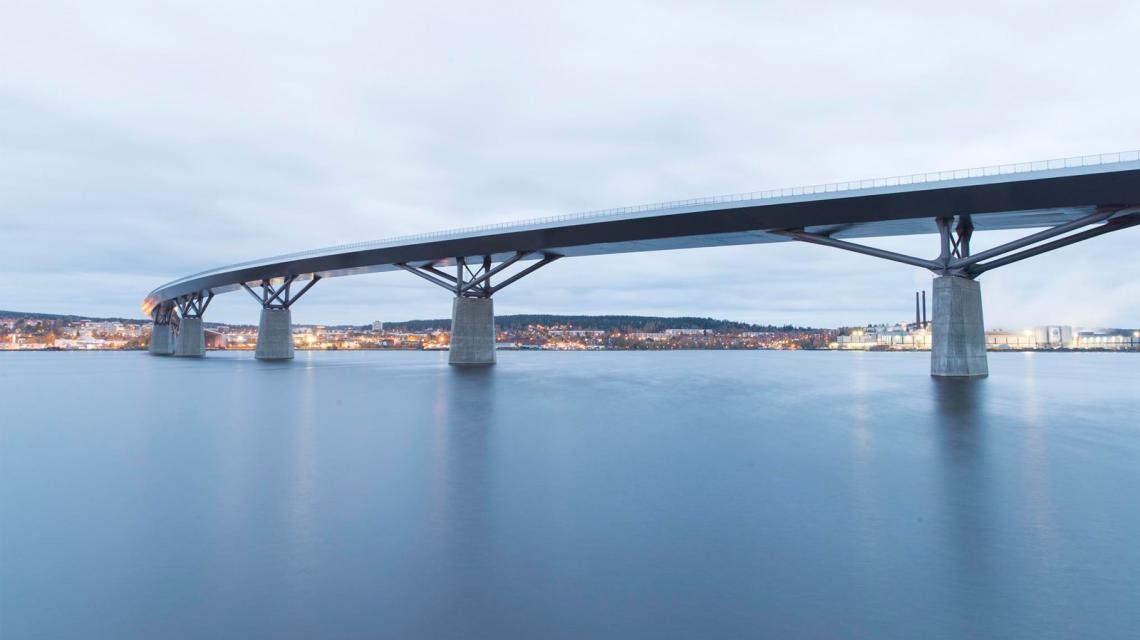
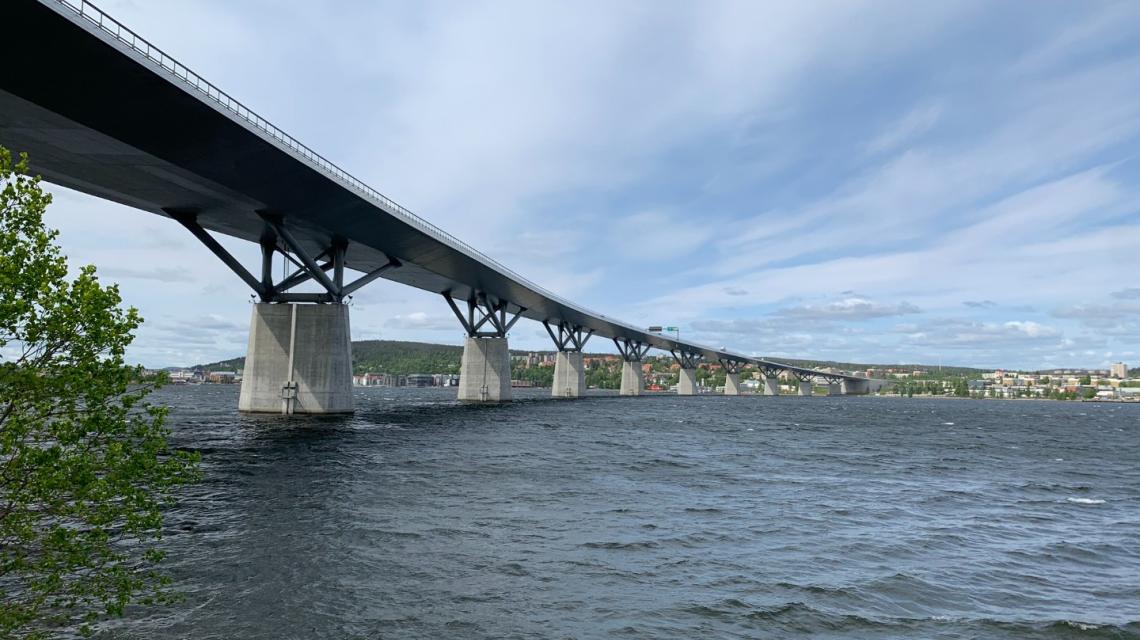
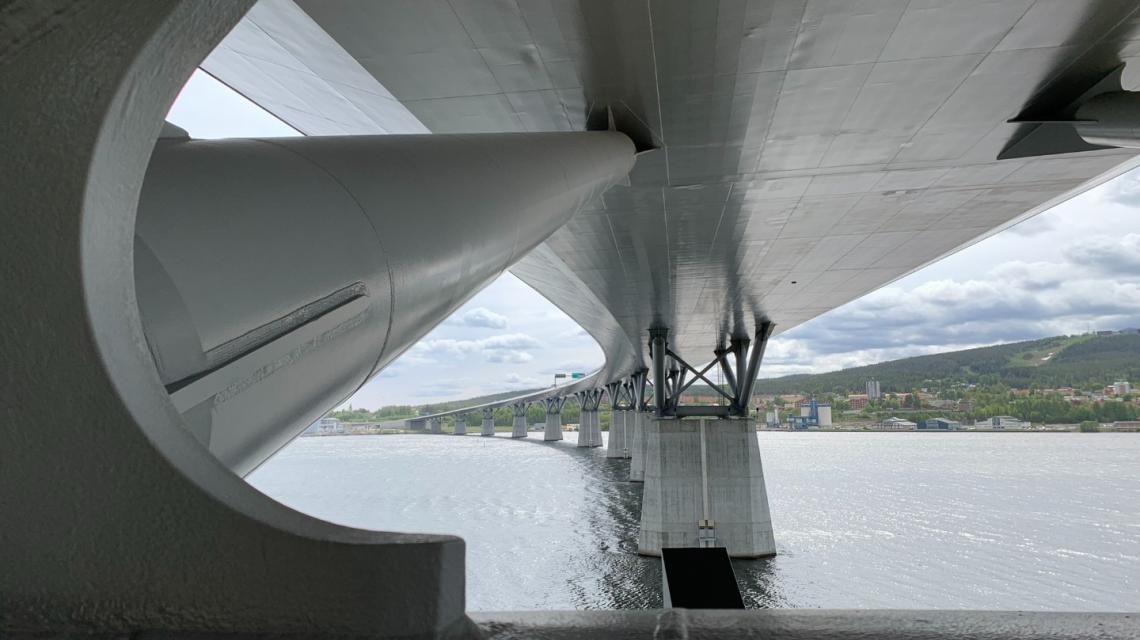
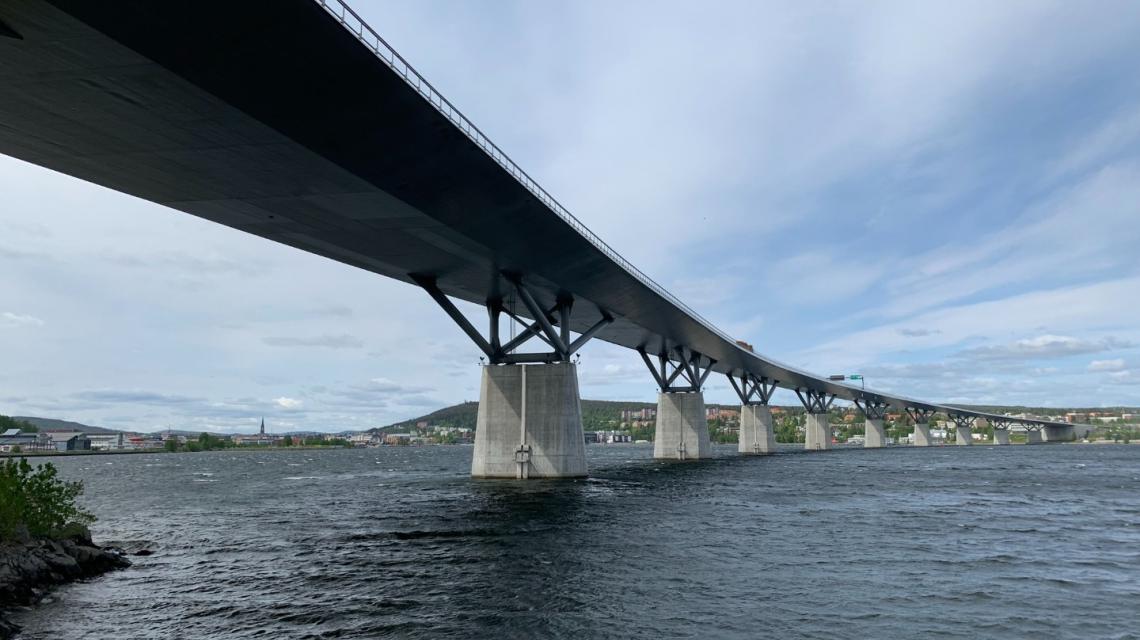
Sundsvall Bridge spans Sundsvall Bay in Sweden and is characterised by its unusual geometry, curving both horizontally and vertically. The structure also varies in width and depth along its entire length. ISC was responsible for the detailed design of the 1.4-kilometre-long steel superstructure.The bridge was built as part of an upgrade to the Swedish E4 motorway around Sundsvall, approximately 400 kilometres north of Stockholm. It helps improve traffic flow and road safety on one of Sweden’s major north–south road links.
A bridge curved in two planes, with 364 different cross-sections
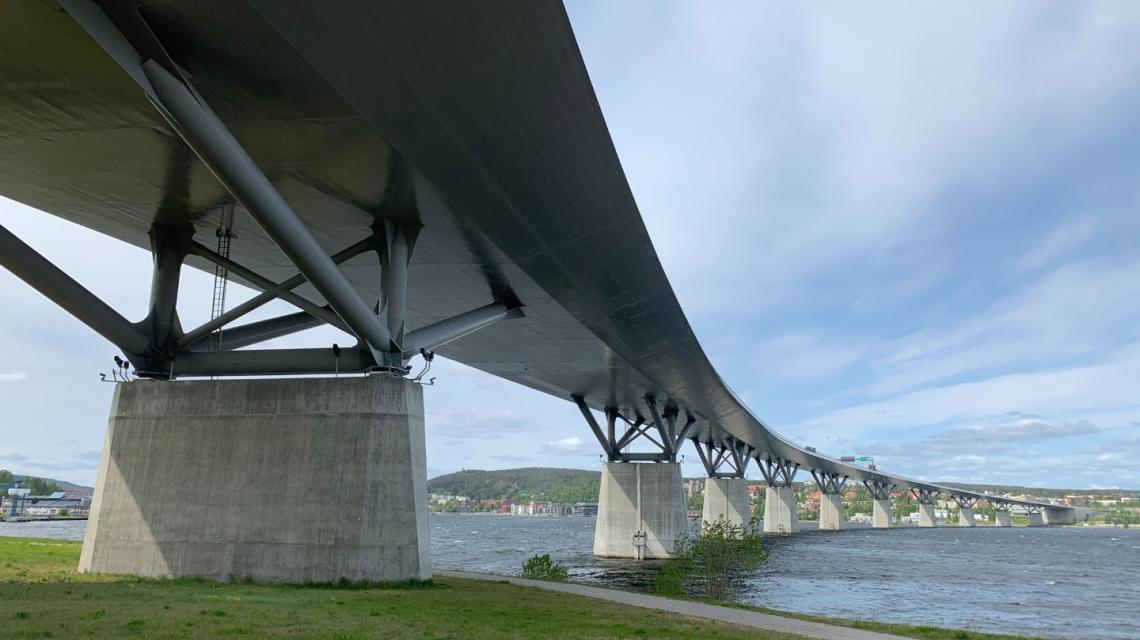
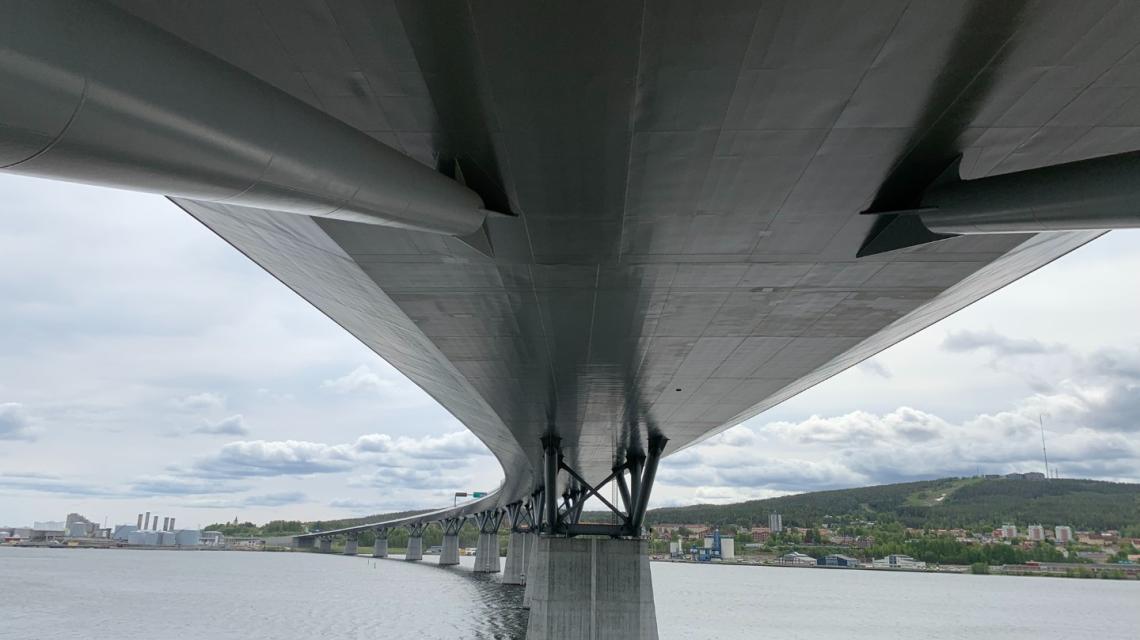
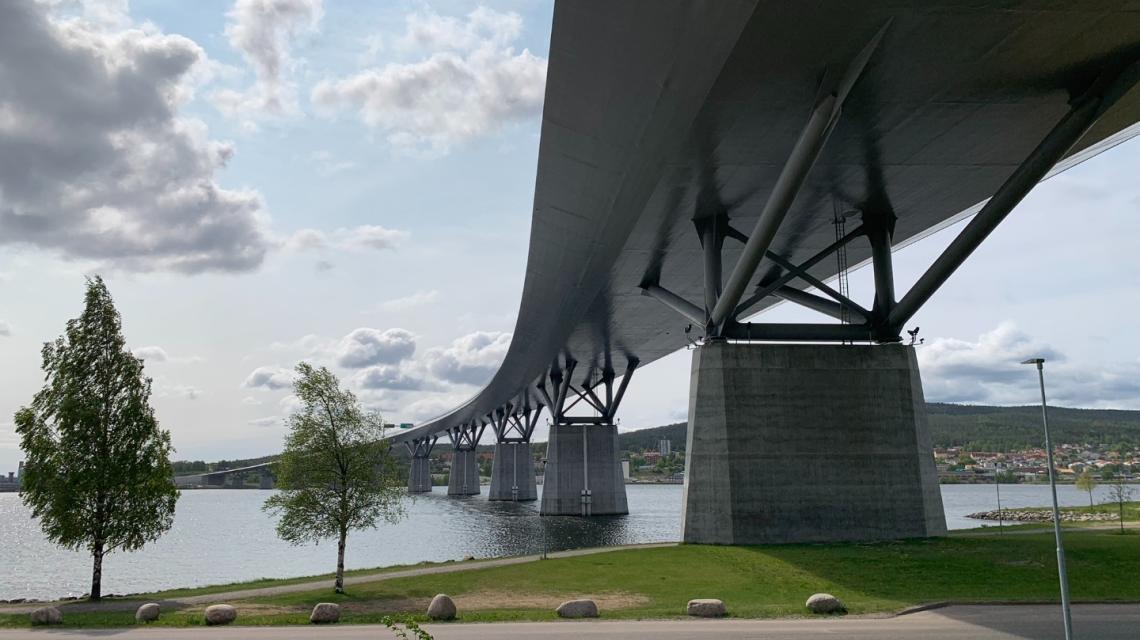
The bridge’s architectural design follows two curves: one in its horizontal alignment and another in its vertical profile. Viewed from above, the bridge follows an arc, while from the side, it rises towards the centre of the bay before descending towards the abutments. Its width and structural depth also vary along its length.Together, these features mean that the cross-section of the steel structure changes throughout the bridge. Each of its 364 transverse diaphragms, spaced approximately four metres apart, therefore has a unique trapezoidal geometry. This placed particular demands on design, fabrication and erection, as the structure could not be based on a repeating series of identical components.
ISC designed the steel superstructure
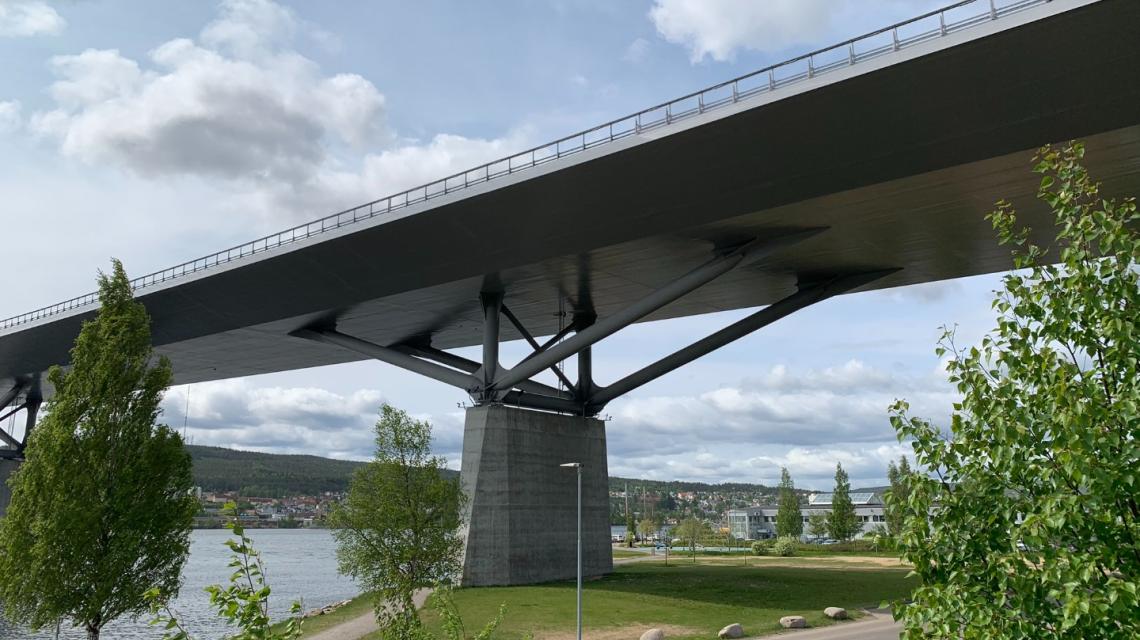
ISC acted as consulting engineer to the contractor consortium JV Sundsvallsbron and was responsible for the detailed design of the entire steel superstructure. This included the continuous closed box girder, the bridge deck, internal stiffening and the V-shaped tubular steel structures supported by concrete piers.The work included structural calculations and detailed finite element (FE) analyses, using numerical models to calculate loads and stress distributions. Among other purposes, these analyses were used to verify the strength and fatigue life of critical connections.ISC’s design work also took account of fabrication and erection processes, including the specific structural conditions involved in joining the bridge sections and establishing the bridge’s permanent load-bearing system.
Built to last 120 years
The structure has a design life of 120 years, placing extensive demands on the verification of load-bearing capacity, stability and fatigue strength. Fatigue strength is particularly important for bridges, as repeated traffic loading can, over time, cause cracks to develop in steel structures and welded connections.